Dativ, Akkusativ, and a big headache

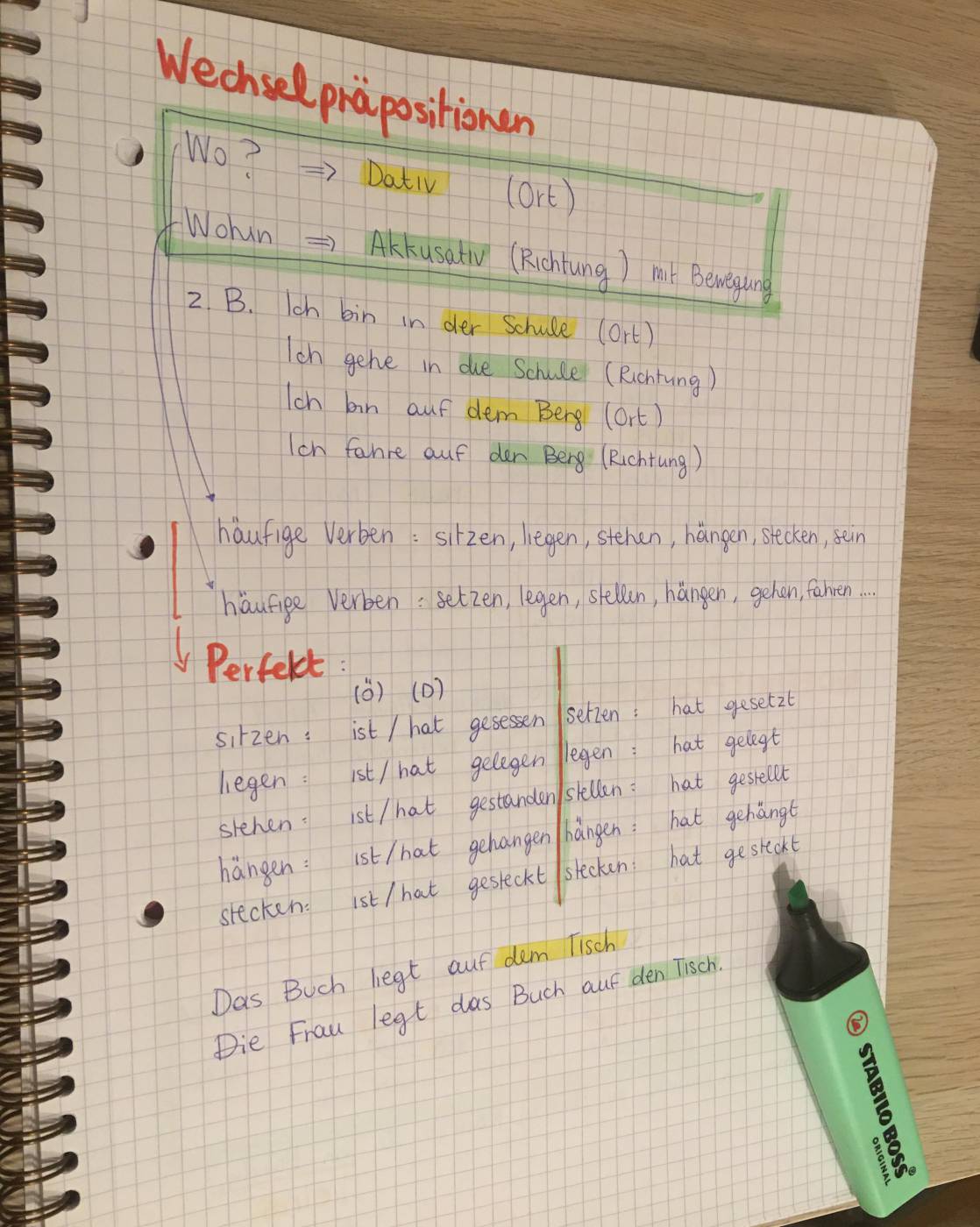
It’s day 3 of my 2022 DeutschAkademie adventure and it’s a tough topic today: Wechselpräpositionen. It was hard enough to learn the articles in “Dativ” and “Akkusativ”, and to remember that with these prepositions (an, neben, zwischen…) the dativ was required (we did this in A1.2). But now we have to use them with akkusativ too? But in a different situation and with different verbs? German is really a challenge 🙂 Between the thousand rules and the exceptions and the very illogical things that you have to learn by heart…. the good thing is that actually having class every day helps a lot. Even if you wanted to forget something you wouldn’t be able to.

One thing I really like about this course is the homework: weird right? we try to escape them all our school years and now I enjoy them. They actually only take 10-15 minutes. But they are extremely good to see if you’ve understood the new rules and to memorize the new words without having to learn them by heart from a list. Plus we usually get a very small written assignment which we then give to the teacher who brings it back the next day. I’m usually very confident that what I wrote is correct, but when the corrected version comes back.. Let’s just say I’m here to learn ?
WOVOR, WORAUF, WORAN

About what, on what, at what. A rough translation for an apparently easy topic but then we realized that is way trickier than it looks like. The differences are quite subtle and in English especially there is no specific translation for all of them.

After the first hour of going through grammar we started doing some exercises and did some translations as well. After that, we broke out into small rooms and asked each other some phrases using these 3 words.


Around half an hour before ending our class we also studied how to say “I am looking forward to see you“, „I am looking forward to go there“, „I have joy doing something” etc.

The lesson was quite intense, especially because we all had lots of questions about this new topic but finally, we managed to get the best out of it.

This afternoon I am going to go to the canal to have a walk with a friend of mine. Today it is such a spectacular day, yet glacial, but I want to catch some sun lights.

Have a nice evening and see you tomorrow for our last class!

Irregular verbs. Nightmare.

Whichever language you have studied in your life or whichever language you speak, you had to go through irregular verbs. And we all know the struggle.

Especially, finding a logic behind them, unfortunately, it is pretty much impossible. It is all about studying them.

That was today’s topic: We went through a list of irregular verbs and we started learning how they are declined, their pronunciation, how to use them and few exercises. I have to admit that a part from the initial struggle, after few exercises we all understood the way on how to use them. If you want to talk about the series you saw, the food you ate yesterday, or how you came across a new shop, you will need to use the German irregular verbs.

Irregular verbs are also called ’strong‘ verbs. They are those verbs that will have different conjugations than regular verbs. They also have some unexpected changes, which can really set you off. Unfortunately, there is no standard way to know exactly when and how these verbs will change. So we just have to study them is learn them by heart.

Our teacher then, gave us few exercises to do for the very next day. So I am going to go back home today to study and practise.

Right now, I am in Schönbrunn Palace a beautiful and huge park where there is an imperial palace that used to be the summer house of the Habsburg rulers. Just as I get home I will do tomorrow’s homework and hopefully, I will be able to remember all the entire list!

Liebe Grüße,

Ruben 🙂

Wer Wissen schafft, macht Wissenschaft

Hallöchen…,
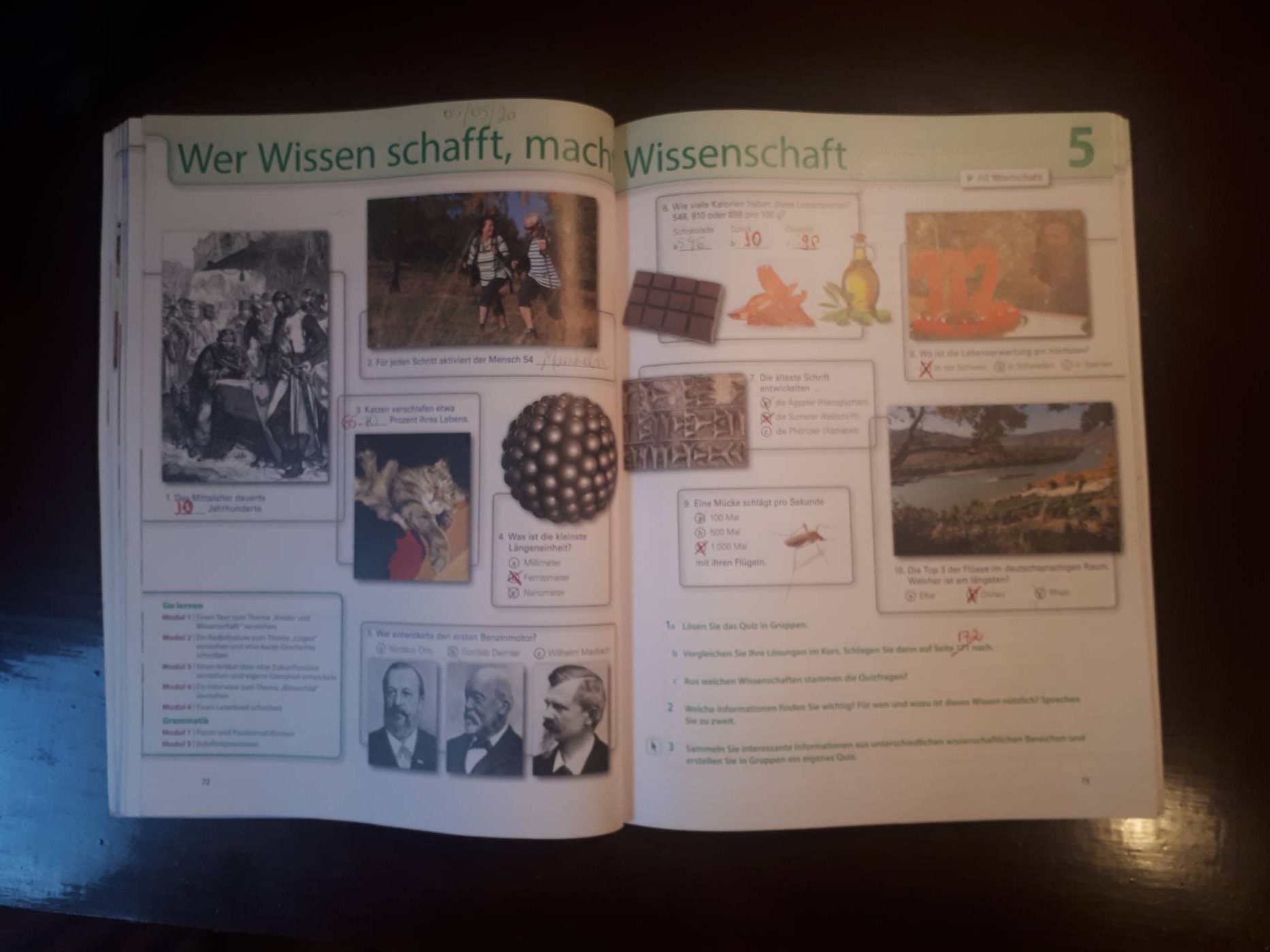
wir haben in der Lektion 5 unter dem Titel “ _Wer Wissen schafft, macht Wissenschaft“_ viele neue interessante Neulichkeiten kennengelernt. Gerne teile ich mit euch eine paar:
Eine Mücke schlägt pro Sekunde 1000 mal mit ihren Flügeln. 100 g Oliveöl (898 Kalorien) hat mehr Kalorien als 100 g Speck (810 Kalorien). Katzen verschlafen etwa 65-70 Prozent ihres Lebens, In der Schweiz ist der Lebenserwartung am höchsten. Die älteste Schrift entwickelten die Sumerer, nicht die Ägypter wie die meisten Menschen denken. Für jeden Schritt aktiviert der Menschen 54 Muskeln. Das Mittelater dauerte 10 Jahrhunderte. Femtometer ist die kleinste Längeneinheit, und nicht Nanometer wie ich gedacht habe.
Ich habe mich entschieden über dieses Thema zu schreiben, weil es für mich sehr informativ war und die Allgemeinbildung hebt. Vielleicht finden Sie das ja auch..??

Online Live Deutschkurs – Vorteile

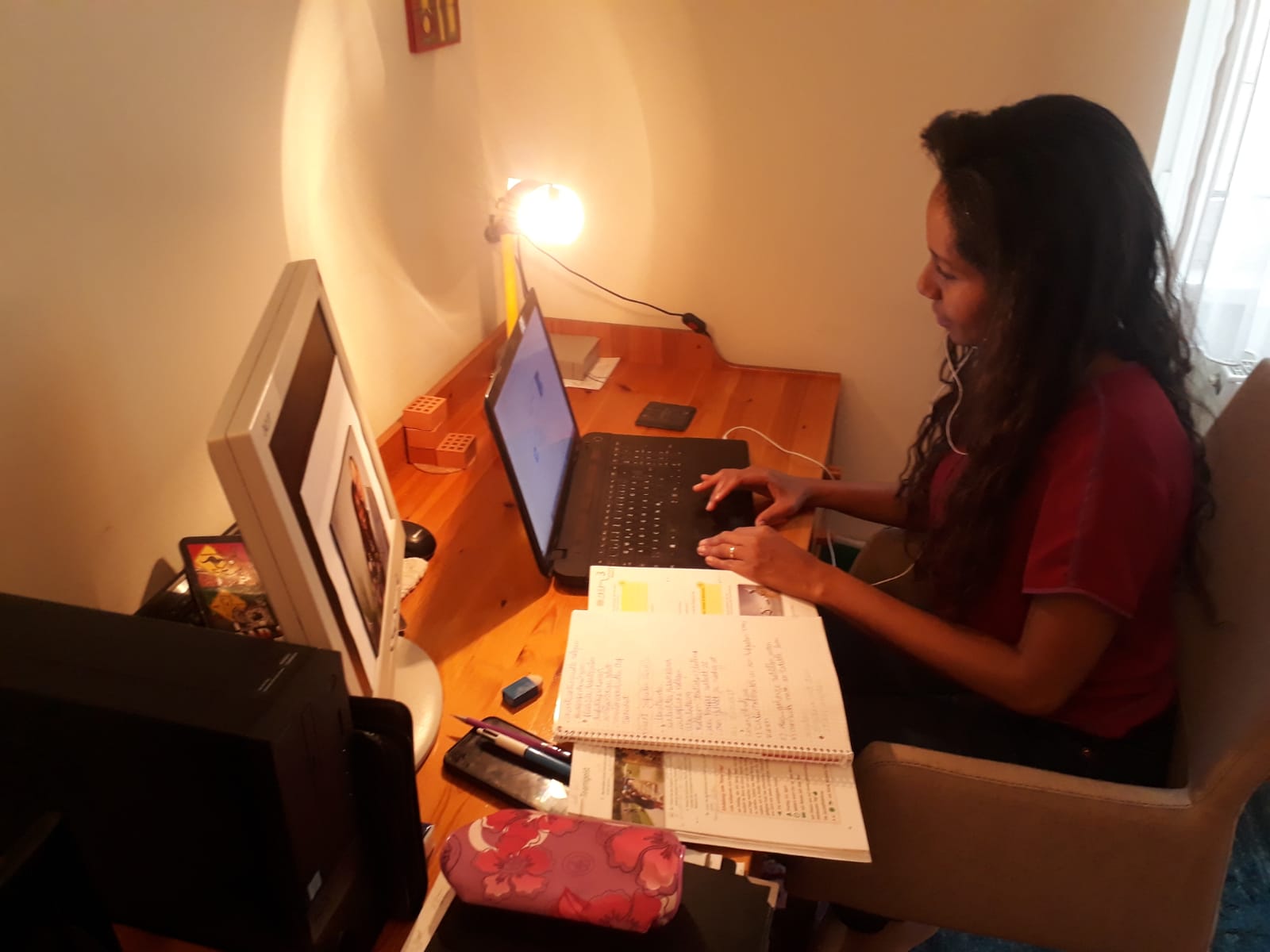
Hallo ihr, wir sind jetzt in der letzten Woche von unserem online Deutschkurs. Ich habe nicht gewusst, dass man in vier Wochen ein ganzes Buch durchstudieren kann. Aber das ist möglich, Morgen fangen wir die letzte Lektion an. Ich habe viel gelernt. Ich denke dass mir der online Kurs geholfen hat, der Lehrer hat es gut geschafft unsere Aufmerksamkeit zu bekommen. Das interessante war, der Lehrer kannte die Schüler wirklich gut. Warum sage ich das? Er konnte den Gesichtsausdruck von jeden  Schüler interpretieren und wenn er durch unseren Gesichtsausdruck bemerkt, dass ein Schüler ein Thema nicht gut verstanden hat, fragte er nach und räumte die Zweifel aus. Ein anderer Punkt vom Onlinekurs, den ich toll finde, ist  wir haben Montag bis Donnerstag Nachmittags zusätzlich einen Lehrer bei Zoom. Er steht für die Beantwortung unserer Fragen zur Verfügung. Heute zum Beispiel war ich fast zwei Stunden online und ich konnte mehrere Fragen stellen, und auch von den Fragen der anderen Schüler lernen. Während der Pause, schaltet jeder den Ton und das Video aus, und wir können den Komfort unseres Hauses genießen. Ein Online-Kurs hat viele Vorteile.


Deutsche Sprache


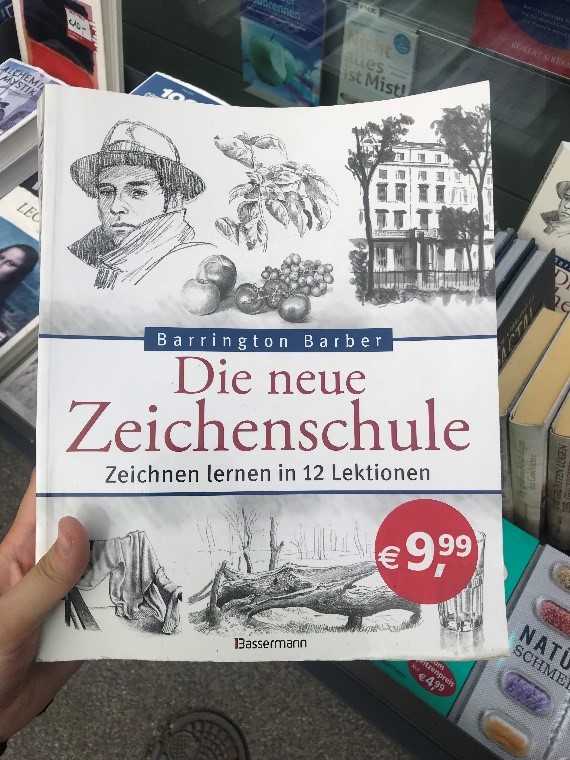
街上的书店好多。虽然大部分看不懂,但我还是很喜欢没事就去里面逛逛。这不,淘到一本德语素描书,非常好看。跟着步骤猜猜看,也就大致明白了里面的德语是什么意思。学语言还是要抓住一切机会多读多看多使用。

Las 5 palabras más largas del alemán

El alemán tiene fama de ser difícil y tener palabras largas. Me entró curiosidad y busqué en internet cuáles son. Pero antes, quería decirles cuál es la palabra más larga que conozco yo:

“Sehenswürdigkeiten”, algo como “atractivos turísticos para ver”. Me siento orgulloso de saberla.

Entonces, ¿cuál es la palabra más larga del alemán?

Según el Record Guinness, ésta es la palabra más larga del alemán, y de paso, la palabra más larga del mundo: “Donaudampfschifffahrtselektrizitätenhauptbetriebswerkbauunterbeamtengesellschaft” (Sociedad de funcionarios subordinados de la construcción de la fábrica principal de la electricidad para la navegación de barcos de vapor en el Danubio) con 79 letras. What? Me alegro mucho de no tener que usarla nunca.

La segunda palabra más larga del alemán tiene 67 letras nada más,y es esta: “Grundstücks­verkehrs­genehmigungs­zuständigkeits­übertragungs­verordnung” (ordenanza de transferencia de competencias sobre terrenos). Como la anterior, creo que tampoco la necesito.

La tercera tiene 63 letras. Fue también Record Guiness en 1996 y hasta el 2013, la palabra más larga, cuando las dos anteriores fueron creadas (¿o debería decir construídas?) y después eliminada por ser simplemente, imposible. La obra de arte es esta: “Rindfleischetikettierungsüberwachungsaufgabenübertragungsgesetz“. Significa “Ley sobre la transferencia de las obligaciones de vigilancia del etiquetado de la carne de vacuno y la designación de los bovinos”. Un dato curioso de esta palabrita es que en 1999 fue nombrada la palabra del año por La Academia del Idioma Alemán.

Otra perla del alemán es “Kraftfahrzeug-Haftpflichtversicherung“ con sus 36 letras quiere decir “seguro de responsabilidad civil de automóviles”. Esta me suena que sí la voy a usar alguna vez.

La quinta es “Donau-Dampfschifffahrtsgesellschaft”, que es la „sociedad de barcos de vapor del Danubio”. No gracias.

Como ven, las palabras en alemán son acumulativas. Es decir, van aumentando y juntándose todas para producir nuevos significados. Me alegro de que todas estas palabras sean, al menos para mí, inservibles.

Entre las palabras útiles están: “Lebensversicherungsgesellschaft“ (Sociedad de seguros de vida), Nahrungsmittelunverträglichkeit“ (indigestión alimentaria) y „Arbeiterunfallversicherungsgesetz“ (Ley de compesación de trabajadores).

Bueno, y así podríamos seguir toda la vida.

Prüfung in DeutschAkademie

Alle die in der DeutschAkademie in Wien Deutsch lernen möchten, haben Fragen über die Prüfung. Die Antworten auf diese Fragen sind nicht leicht zu finden. Als ich in meinen ersten Kurs gekommen bin, habe ich gehört dass wir eine Prüfung schreiben müssen. Das war eine kleine unangenehme Überraschung für mich. Ich habe gedacht, wieso eine Prüfung schreiben? Ich werde eine ÖSD Prüfung machen, aber ich möchte jetzt keine Prüfung schreiben, weil mir Prüfungen Stress machen.

Ich schreibe diesen Post um euch den Stress wegen der Prüfung zu vermindern. Dieser Test ist nicht schwierig, es gibt keine Noten und es ist hilfreich zu sehen wie viel man im Kurs gelernt hat. Manchmal ist es ein Test und manchmal sind es zwei. Es ist besser wenn es zwei Tests gibt, weil die Grammatik in zweie Teile verteilt ist. Deshalb gibt es weniger zu lernen, aber auf der anderen Seite muss man zwei mal für den Test lernen.

Der Test besteht aus Grammatik und Wortschatz Aufgaben. In den Grammatikaufgaben muss man z.B. ein Wort ergänzen, oder Sätze im z.B. Futur I schreiben. Im Wortschatzteil muss man die neuen Wörter verstehen und erklären. Es gibt ein Wort und man muss mit diesen Wort einen Satz schreiben. Und die letze Aufgabe ist einen kurzen Text über ein Thema mit rund 8 Sätzen zu schreiben. Die Prüfung war nicht besonders schwer für mich. Ich habe nach allen Vorlesungen die Hausafgaben gemacht und ein bisschen vor der Prüfung gelernt. Ich denke das ist genug um die Prüfung erflogreich abzuschließen.
Also, kein Stress 🙂


LERNTIPPS

Fiecare dintre noi avem propriile metode de a învăța. Iar când vine vorba de învățarea limbii germane e bine să fim creativi. 🙂

Săptămâna trecuta, la curs am avut o lecție care ne prezenta în vocabularul lecției activități pe care oamenii le pot face pentru a învața mai ușor o limbă străină.

Fiecare învată diferit și prin urmare metodele care au succes la o persoană nu au întotdeauna succes și la ceilalți. De aceea exista mai multe stiluri de învățare:

  • Stilul vizual – când o persoană reacționează mai bine la imagini, culori, tabele, scheme;
  • Stilul auditiv – când o persoană reacționează mai bine la informația auzită;
  • Stilul comunicativ – când o persoană consideră exersarea vorbirii limbii străine cel mai important lucru;
  • Stilul cognitiv – când o persoană consideră gramatica foarte importantă și dorește sa înțeleagă mai întâi toate regulile;
  • Stilul kinestezic – când o persoană lucrează cu plăcere cu mâinile lor. Simt nevoia să țină lucrurile în mâini, să scrie, să facă propriile notițe.

Bineînțeles că majoritatea oamenilor au nevoie de un mix de metode, pentru că nu li se potrivește doar un singur stil de învățare.

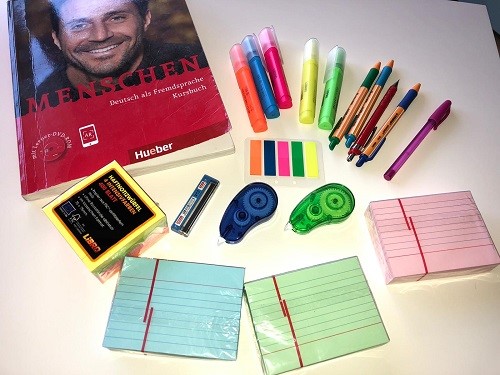
Pe mine, de exemplu, mă ajută foarte mult bilețele colorate pe care notez cuvintele noi învățate.

Pentru verbe îmi pregătesc cartonașe pe care notez pe o parte verbul la infinitiv în germană și forma de participiu trecut, iar pe cealaltă parte traducerea verbului în limba română.

Deasemenea consider gramatica foarte importantă și încerc să rezolv cât mai multe exerciții ca să înteleg cât mai bine noțiunile predate de profesoara mea la ore.

Pentru că sunt mare iubitoare de seriale și filme urmăresc filme pe Netflix și Amazon Prime în limba engleză cu subtitrare în germană sau în limba germană cu subtitrare în limba engleză – astfel aud cuvinte noi și îmi notez expresii uzuale.

Când am timp încerc să citesc și ziare. Îmi aleg un articol, iar când întâlnesc cuvintele noi pe care nu le înțeleg folosesc dicționarul să le traduc.

Consider că învățarea limbii germane necesită multă muncă și determinare.

Ce mi-aș dori să fac mai mult decât fac deja? Mi-aș dori să conversez mai des cu vorbitori nativi de limba germană.

Voi ce metode folosiți pentru învățarea limbii germane? Aveți vreo metodă preferată? 🙂

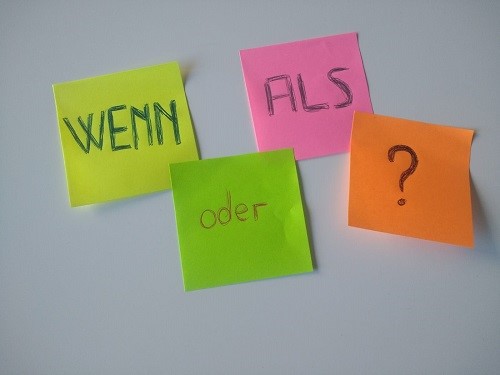
WENN oder ALS?

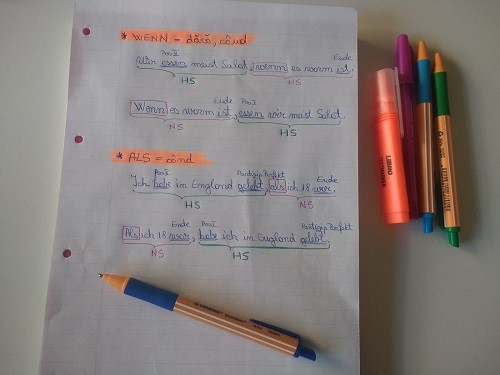
Dificultatea utilizării corecte a conjuncțiilor temporale Wenn și Als este că ele se traduc la fel („când”/ „dacă”) însă se utilizează în situații diferite.

Atunci apare întrebarea: Când folosim Wenn și când folosim Als?

  • Propoziția secundară (NS) se introduce cu ajutorul lui Wenn pentru exprimarea unei acțiuni prezente sau viitoare sau pentru exprimarea unei acțiuni repetate în trecut. Repetarea poate fi accentuată cu adverbele immer(mereu) sau jedes mal(de fiecare dată).

Exemple:

Ich backe eine Torte, wenn jemand Geburstag hat. / Eu (mereu) fac un tort, când cineva are o zi de naștere.

Wenn es morgen schön ist, können wir Fahrrad fahren. / Dacă mâine vremea este frumoasă, am putea să ne plimbăm cu bicicleta în parc.

Ich werde immer nervös, wenn ich meinen Kollegen ein Projeckt vorstellen muss. / Eu mereu am emoții, când trebuie să prezint un proiect în fața colegilor.

  • Propoziția secundară (NS) se introduce cu ajutorul lui Als pentru exprimarea unei acțiuni terminată în trecut nerepetată.

Exemple:

Was hast du gestern gemacht, als dich deine Mutter besucht hat?  / Ce ai facut tu ieri, când te-a vizitat mama ta?

Als ich nach Österreich gekommen bin, habe ich kein Wort Deutsch verstanden. / Când am ajuns în Viena, nu întelegeam nici un cuvânt în germană.

Conjuncțiile WENN și ALS introduc propoziții secundare, ceea ce însemnă că verbul în aceste propoziții stă la finalul lor. Fraza poate fi începută și cu propoziția secundară, caz în care verbul în propoziția principală stă pe poziția 1.

Pe mine m-au ajutat foarte mult explicațiile profesoarei mele de la DeutschAkademie și toate exercițiile pe care le-am făcut în clasă și acasă.

Nu este ușor să folosești corect conjuncțiile WENN și ALS, însă în timp cred că dacă exersăm ce am învațat la curs o să ni se pară din ce în ce mai ușor să facem distincția între ele. 🙂

German tips

As a native English-speaker, many vocabulary words look familiar. This week, we learned “Laptop,” “Computer,” “SMS,” “Telephone,” “Kalender,” “E-Mail,” “orange,” “pink,” “Papier,” “Metall,” “Glas,” “Plastik,” “Sofa,” “Couch,” “Lampe,” “modern.” Some words are spelled exactly the same in German and English while most differ by a letter or two.

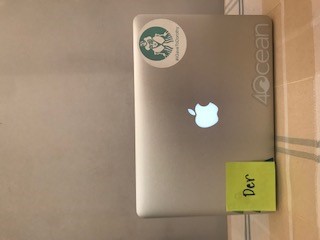
This helps with vocabulary retention; however, the “new” word is not all you need to know. Do not be fooled, you must also know the article (der, die, das) that goes with each word. While I’m going through my vocabulary list, I might not think to spend any time studying “Laptop.” However, don’t consider the word known until you are able to correctly say which gender a “Laptop” is. When my class was learning “Laptop,” we were focusing on how masculine words change when they act as accusatives or direct objects, so it was imperative that we knew which were masculine. Through repetition, I was able to remember “der” goes with “Laptop.” If you need extra practice with articles, I’ve put sticky notes on some objects around the home. I especially think it helps if you have a color-coding system!